
Most people who end up on a page like this have already had the same unhelpful conversation twice. One contractor says the whole perimeter needs excavating. The next says it is nothing. Neither explains how they arrived there, and both want a decision today.
Start With What You Can See
You do not need to know the name of the repair to describe the problem, and the description is usually enough to narrow it down a long way. Water arriving within an hour of heavy rain behaves differently from water that turns up two days later. A crack that weeps is a different animal from one that has moved. A musty smell with no visible water points somewhere else again.
The basement problems section works through each of those symptoms — what causes it, how urgent it honestly is, and what actually fixes it. Start there if you are still working out what you are looking at.
Why Kalamazoo Basements Behave the Way They Do
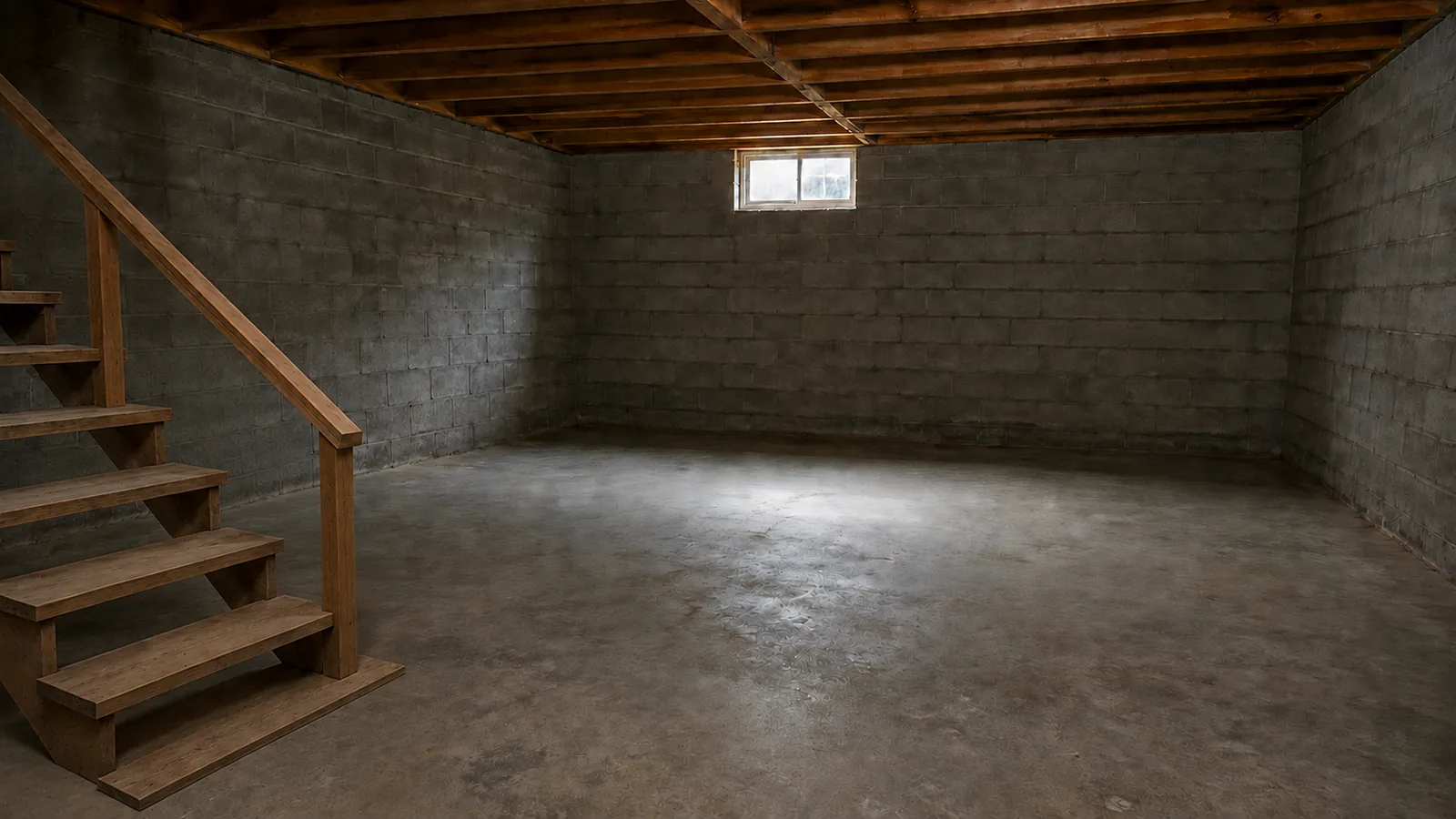
Southern Michigan’s frost depth runs to around 42 inches. Once a builder is digging that far down for the footings, a full basement costs very little extra, which is why almost every house here has one and almost no house in the South does. It also means a large share of local basements are old enough to have block or stone walls rather than poured concrete, and those fail differently — stepped cracks at the mortar joints, horizontal cracking part way up, inward movement rather than simple leaking.
The ground does not help. This is glacial country: outwash sand and gravel on one street, clay till on the next, sometimes both across a single lot. Sand delivers water to a foundation fast. Clay holds it against the wall for days and swells while it does. Add a freeze-thaw cycle that widens every crack it gets into, and a spring thaw where snowmelt and rain arrive on ground that is still frozen solid, and March to May becomes the season when basements show what they have been hiding all year.
What We Will Tell You
That a meaningful share of wet basements are fixed outside the house for a few hundred dollars — downspouts, grading, a window well drain — and that anyone quoting interior drainage before they have walked your perimeter has skipped a step.
That cracks in a basement floor are usually curing shrinkage and usually need nothing at all.
And that some problems genuinely are structural. A wall that is bowing inward is carrying a load it was not built for, and that one does not wait.
How It Works
Send a description and a couple of photographs through the contact form, or call. A wide shot of the affected area, a close-up of any crack with a coin or a tape for scale, and a picture of the outside wall on that side are usually enough for a first opinion before anyone comes out.
Inspections are free and carry no obligation. If what you have needs nothing, that is what you will be told.