
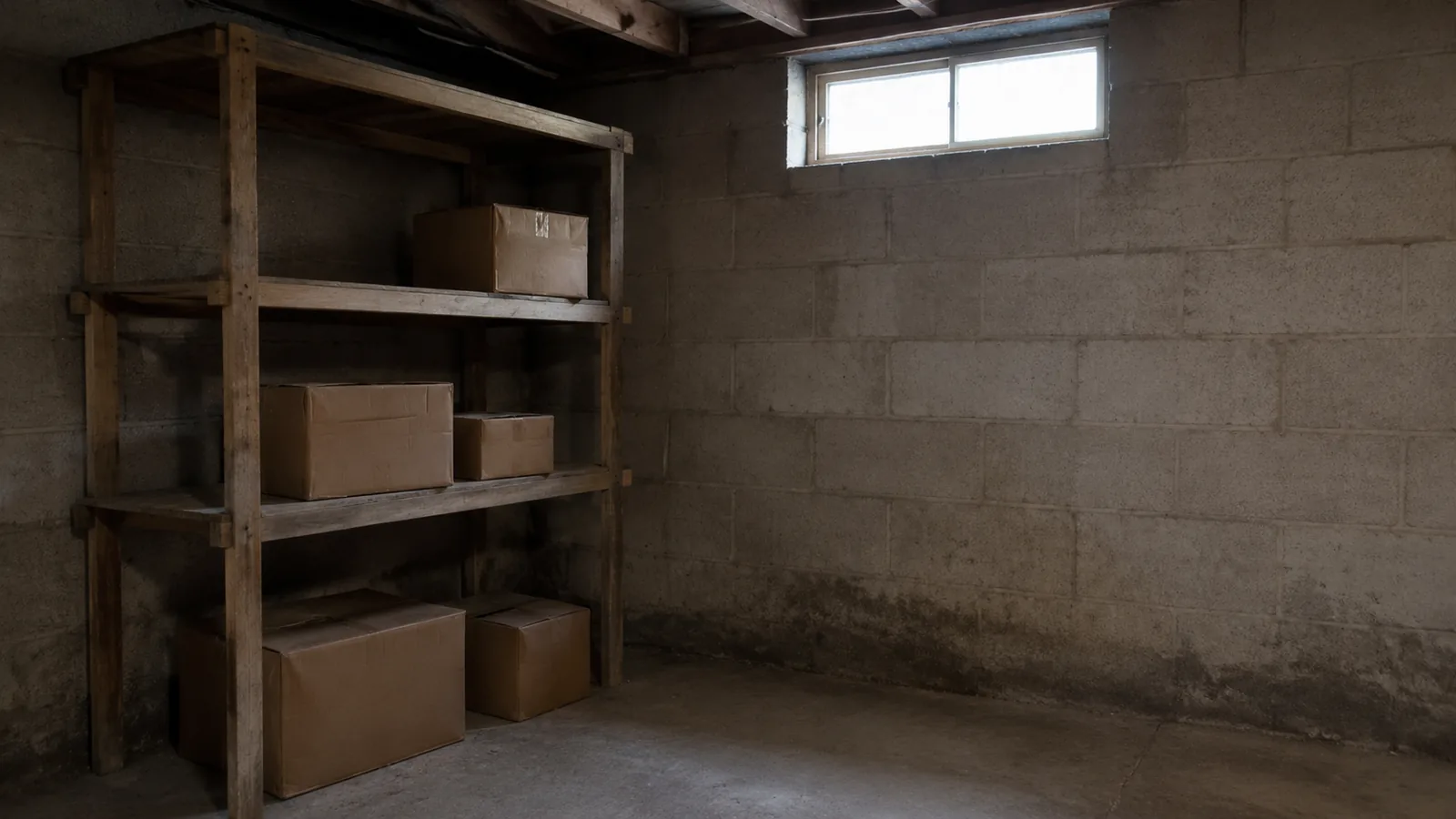
The smell is not the problem. The smell is information, and it is reliable information, which makes it more useful than most of what a basement gives you. That earthy cellar odour is produced by molds and soil bacteria metabolising organic material — paper, cotton, timber, dust, the paste behind old wallpaper — and they only do that when there is enough moisture available. Dry material does not smell. So a musty basement means something down there is wet, and the whole job is finding out what.
Where the moisture is coming from
There are only four routes for water into a Kalamazoo basement, and the smell rarely tells you which one you have on its own. Water can come through the walls or floor from the ground outside. It can condense out of humid air onto cold surfaces. It can arrive from a plumbing fault, a leaking water heater or a furnace condensate line. Or it can be walked, washed and vented in — a dryer discharging into the room instead of outside, damp laundry, an unlidded sump.
Condensation is the one people miss, and in this climate it is seasonal in a way that gives it away. In July a basement wall is still holding the ground’s temperature from months earlier, and warm humid air meeting it condenses exactly as it does on a cold glass. If the smell arrives in June and fades in October, and the walls feel clammy rather than wet, that is almost certainly what you have. Basements here are heated storage or living space rather than vented crawl spaces, so this matters more than it would further south — the damp is inside the building envelope with you.
Ground water is the other big one, and it announces itself by timing. If the smell sharpens a day or two after heavy rain, or every March and April when the frozen ground thaws and the water table comes up, the wall is letting water through. Our page on water seeping through a basement wall covers how that works and how block walls differ from poured ones.
Two tests that cost nothing
Tape a foot-square piece of plastic sheet tightly to a dry-looking area of wall, all four edges sealed, and leave it a couple of days. Moisture on the room side means the air is condensing on cold masonry. Moisture on the wall side means water is coming through the wall. Those two answers lead to completely different bills.
Then buy a cheap hygrometer and leave it on a shelf. Below about 55 per cent relative humidity, mold does not get going. Above 60 it does, and above 70 it thrives. Knowing the actual number turns a vague worry into something you can act on and check.
The fixes that are free or nearly free
This is worth saying plainly, because a lot of musty basements are solved without a contractor.
Cardboard boxes, old carpet and underlay, stored clothing and firewood are not victims of the damp — they are the food source. Damp cardboard is one of the most efficient mold substrates there is. Getting all of it off the floor, out of the room, or into sealed plastic bins often removes most of the smell within a fortnight.
Check the floor drain. Its trap holds a small amount of water to block sewer gas, and in a basement that gets used little the water evaporates. Pouring a jug of water down it once a month is the entire fix. Note that sewer gas smells of sewage rather than earth — if the odour is sharp and unpleasant rather than mushroomy, that trap, or a failed ejector pit seal, is the first thing to check.
Make sure the dryer vents outside, that the sump has a sealed lid, that the dehumidifier’s tank is not sitting full, and that its outlet drains to the sump rather than into a bucket you forget about. A decent dehumidifier is $200–$400 and, once the water source is fixed, is usually enough on its own.
When it needs actual work
If the plastic sheet came back wet on the wall side, or the smell is tied to rainfall, or there is a tide mark on the wall, or the block is showing a white chalky bloom, you have water entering and no amount of ventilation will keep up with it. The same goes for a basement that has visible mold growth on framing or drywall rather than surface bloom on masonry.
Two honest cautions. Do not pay for mold remediation while the source is still wet — it will come back, and any remediator worth using will tell you the same thing. And do not treat a musty basement as a health emergency on the strength of a smell alone; it is a reason to find the damp, not a diagnosis. Separately, and unrelated to smell, radon is worth testing for in this part of Michigan because it is odourless and a test kit is cheap. It has nothing to do with the musty smell, but people ask.
What it costs
Housekeeping, a dehumidifier and a floor drain trap: under $500 all in, and this genuinely resolves a good share of cases.
Outside corrections — downspouts extended well away from the wall, ground regraded so it falls away from the house, window wells cleared and drained — commonly run a few hundred dollars up to about $2,000, and they should be checked before anyone talks about interior work.
Where water is genuinely entering below grade, the answer is drainage and a sump, commonly $8,000–$15,000 for a full interior perimeter system on a typical house. Our basement waterproofing page explains how those systems are put together, and the cost page sets out what pushes a quote to the top or bottom of that range. If yours turns out to be a pile of damp cardboard, we would rather tell you that.