
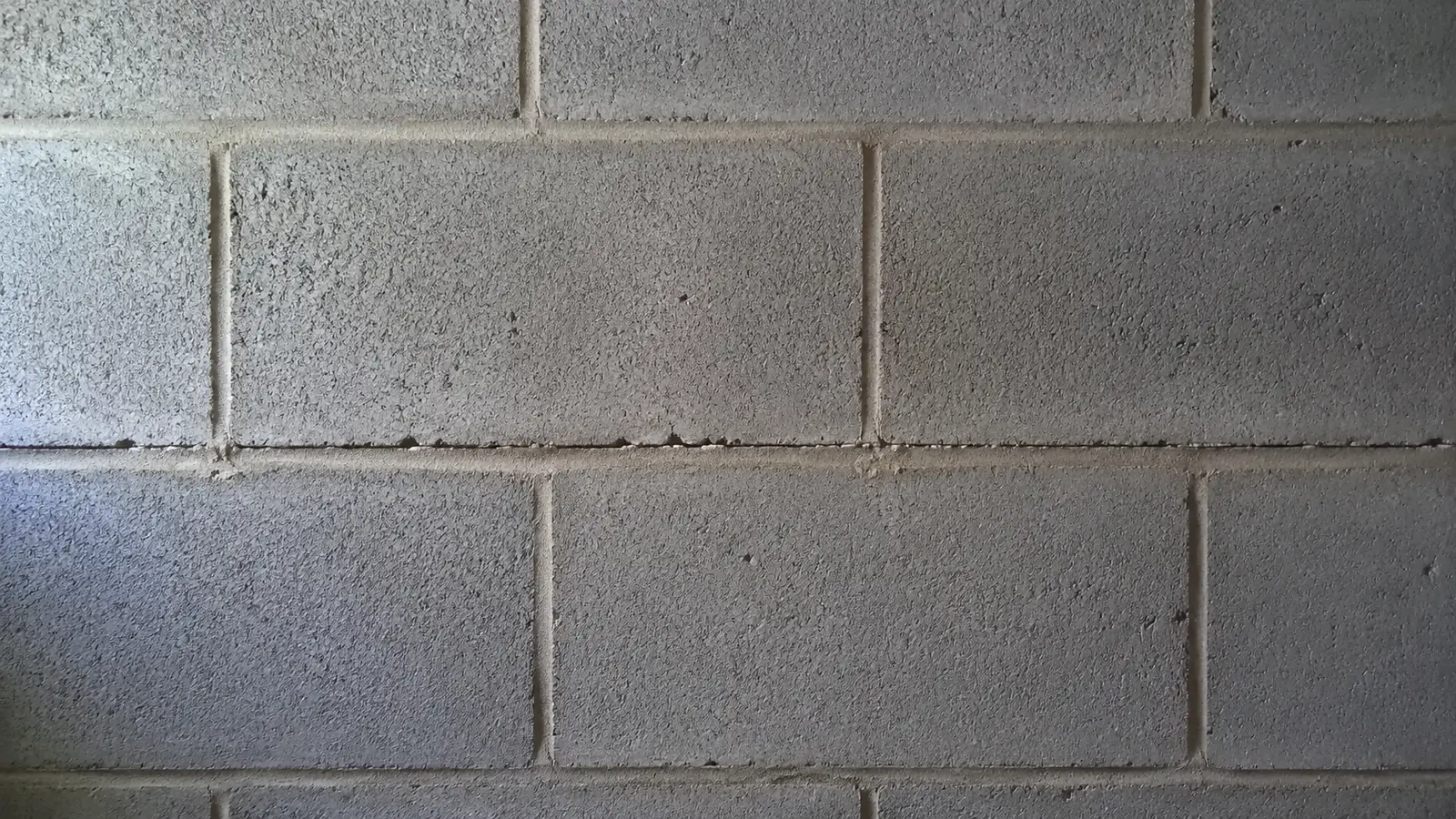
Most cracks in a basement do not matter much. This one does. A horizontal crack running along a foundation wall is not shrinkage, not settlement and not a water problem that happens to look alarming. It is a bending failure: the soil outside is pushing sideways harder than the wall can resist, and the wall has cracked where the bending stress is highest. That is a genuinely different category from the vertical and diagonal cracking covered on our basement wall crack page, and it should be looked at by someone this week rather than filed under things to think about.
What the wall is actually doing
A basement wall is a retaining wall. It is held at the bottom by the floor slab and at the top by the floor framing, and between those two restraints it spans vertically against the soil pushing on it. Push hard enough and it bows inward, and the point of maximum bending is near mid-height. That is where it cracks, and that is why the crack is horizontal — it runs at right angles to the direction the wall is bending.
In a concrete block wall the failure is almost pre-scripted. Unreinforced block has very little tensile strength and the mortar bed joints have less still, so the crack opens along one continuous bed joint, commonly three to five courses up from the floor. Above the crack the wall tips inward as a hinge; below it, it stays put. A lot of Kalamazoo’s older housing stock is exactly this — unreinforced block, or stone laid in lime mortar — and it is why horizontal cracking is a local pattern rather than an unusual one.
In a poured concrete wall a horizontal crack is less common and means more, because poured concrete has to be pushed considerably harder before it gives up in bending. If you have one in a poured wall, take it at least as seriously as you would in block.
What is pushing
Water is usually behind it, even though the crack is not a water problem. Saturated soil is much heavier than dry soil, and the clay till that runs in bands through this glacial terrain swells as it takes water on. A wall that stood comfortably against dry clay for forty years can be overloaded by the same clay wet. Spring is when it shows: frozen ground thaws, snowmelt and rain arrive together, the water table comes up, and everything presses at once.
Frost adds to it. Southern Michigan’s code frost depth is around 42 inches, so the top three and a half feet of soil against your wall can freeze solid in a hard winter and expand inward. And once a crack exists, freeze-thaw works on the crack itself — water gets in, freezes, expands, opens it a fraction, thaws, takes on more water and repeats, dozens of times between November and April. A horizontal crack that is being watered is not stable, whatever it looked like last year.
The other usual suspects are cheap to remove and worth checking: a downspout discharging into the backfill beside the crack, ground sloping back toward the house, a parking pad against the wall where vehicles add surcharge, roots from a large tree close in.
Judging how bad yours is
Do this properly, because it is the number that decides everything. Drop a plumb line, or hold a straight edge vertically against the wall from the top plate to the floor, and measure the largest gap between wall and line. That is the deflection — how far the wall has moved inward — and it matters more than crack width.
Under about an inch of deflection, with a crack you can barely get a fingernail into, no offset between the faces, and no crushing at the top or bottom course, the wall is early in the process. It is repairable in place, usually straightforwardly, and it should be repaired rather than watched.
Between one and two inches, with a crack that is visibly open and mortar starting to crumble out of the joint, the wall is well into failure and needs proper structural reinforcement.
Past about two inches, or where the top course has slid inward relative to the wall below it, or where you can see daylight, soil or roots through the crack, or where the crack has a shear step in it, this is urgent. Stop storing things against that wall and get an engineer or a foundation contractor out now. A wall in that condition can fail suddenly, and it usually fails when the ground is wet.
Whatever the number, mark the crack, date it, measure it and photograph it. Movement over a season is the most persuasive evidence you can bring to an inspection, and a Kalamazoo winter and spring is where it will show.
What repair costs
The cheap-sounding options are the ones to be wary of. Filling a horizontal crack with hydraulic cement or injecting it does nothing about the load that made it — the wall goes on bending and the repair simply cracks again. Anyone offering that as a complete answer for a horizontal crack is selling you cosmetics.
Real repairs restrain the wall. Carbon fiber straps epoxied floor to sill are the usual first-line fix for walls that have not moved far, commonly $600–$1,000 per strap with straps four to five feet apart, so a single wall is usually a few thousand dollars rather than tens of thousands. Steel I-beams braced to the slab and joists cost broadly similar per bay and suit walls with more deflection. Helical tiebacks or wall anchors, which reach out into undisturbed soil, cost more per unit but can pull a wall back toward plumb over time — nobody should promise it will return fully to straight. Where a block wall has gone too far, the answer is excavation and rebuilding, which runs into the tens of thousands.
Whatever holds the wall, the water that overloaded it needs dealing with too, or the same pressure comes back. Our basement wall repair page explains how those methods are chosen, bowing basement wall covers the same failure once the movement is visible without a plumb line, and the cost page sets out what drives the totals.