
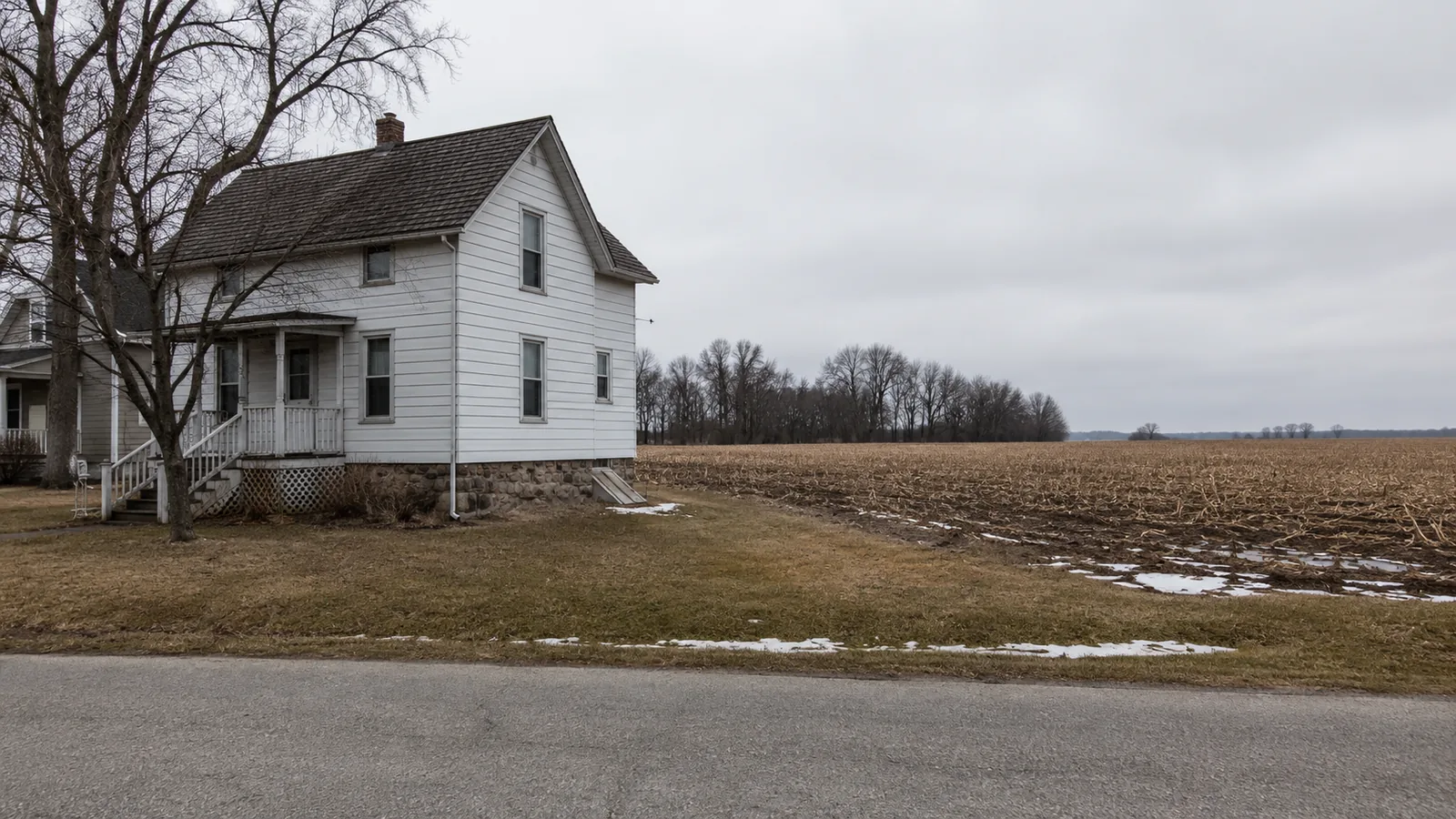
Plainwell sits on the Kalamazoo River, and in a town built along a river the water table is the story. Most basement work here comes down to groundwater rather than anything structural.
Water That Arrives Late
The useful diagnostic in a river town is timing. Water that appears within an hour of heavy rain is surface water — a downspout, a grading problem, a window well. Water that appears two days after the rain has stopped, or during a February thaw when no rain has fallen at all, is groundwater rising from below.
The second kind cannot be fixed with a shovel and a downspout extension. When the water table comes up, it presses on the underside of the slab and around the footing, and it finds the cove joint where the floor meets the wall. That is why the classic Plainwell symptom is a wet line running the length of a wall rather than a puddle in one place. The water in the basement page works through how to read the pattern.
What Actually Helps
For a genuine high-water-table basement, the answer is almost always interior drainage with a sump — tile laid at the footing to intercept water before it reaches the floor, routed to a basin and pumped out. Commonly $8,000–$15,000 depending on how much of the perimeter needs doing.
Two things matter more here than in higher-ground towns. The pump has to be sized for the volume and it has to have a battery backup, because the worst water arrives in spring storms and spring storms take the power out. And a second pump is worth the money on a house that has flooded before — the cost of a spare pump is trivial against the cost of one failure.
Sump pump installation covers sizing, discharge routing and why the backup is not an upsell.
What Not To Buy
Full exterior excavation at $15,000–$30,000 is sold in river towns fairly often and is rarely the right first answer for a rising water table. Exterior membrane stops water reaching the wall from the side. It does very little about water coming up from underneath, which is what a high table actually does. If someone is quoting exterior work for a cove-joint problem, ask them to explain the mechanism.
Free Inspection
Send photographs through the contact form, including one of the outside ground on the affected side. Ranges for every repair are on the costs page.